THE GREAT TERP TURF WAR
BUDZ BITES:
THE GREAT TERP TURF WAR
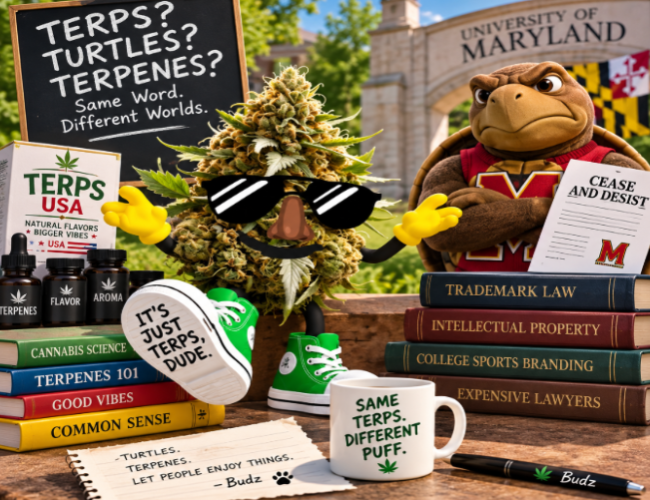
The Great Terp Turf War pits the University of Maryland against cannabis company Terps USA in a trademark dispute over one small word that means two very different things.
Well, folks, it finally happened.
The turtles have entered the cannabis industry.
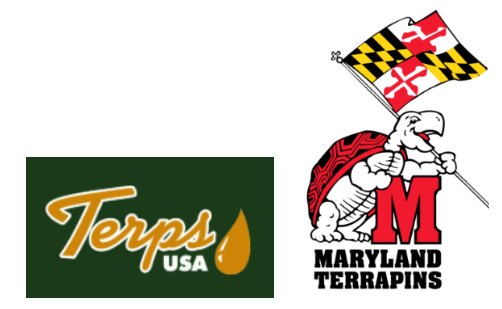
The University of Maryland recently sent a cease-and-desist letter to a Colorado cannabis company, Terps USA, demanding that the company change its name and logo or face legal action.
Now, before anybody starts hiding their gummies, let’s clear something up.
The University of Maryland’s athletic teams are known as the Terrapins, affectionately shortened to “Terps.”
The cannabis industry’s “terps” are terpenes, those aromatic compounds responsible for making one strain smell like lemons, another like pine trees, and another like something that wandered into a skunk family reunion.
Different terps.
Same word.
Cue the lawyers.
According to reports, the university believes the company’s logo resembles its own. The company says it’s willing to discuss the logo but has no intention of giving up its name.
And honestly?
Budz can see why.
If your business sells terpenes and your company is called Terps USA, that’s kind of like a bakery being called Bread USA. It’s not exactly a stretch.
Still, one can’t help but imagine the meeting that launched this whole thing.
- University Attorney: “We’ve got a terp problem.”
- Assistant: “The terpene people?”
- Attorney: “No, the turtle people.”
- Assistant: “Wait… aren’t we the turtle people?”
- Attorney: “Exactly.”
Somewhere in Colorado, a confused cannabis entrepreneur is probably trying to explain to customers why a college mascot has suddenly become involved in his terpene business.
Meanwhile, cannabis consumers across America are nervously wondering if they’re next.
Imagine ordering at a dispensary:
“I really like the terps in this strain.”
A turtle bursts through the wall.
“EXCUSE ME. THAT’S A REGISTERED NICKNAME.”
At this point, Budz would like to remind everyone that language is a funny thing. Entire industries can use the same word and mean completely different things.
Take “buds.”
- Cannabis has buds.
- Flowers have buds.
- People have buddies.
Yet somehow nobody has sued Budz for existing.
At least not this week.
The company has reportedly used the name Terps USA since 2019 and received a federal trademark in 2021. Lawyers from both sides are now discussing the matter.
Which means the only guaranteed winners are the attorneys.
As for Budz, he plans to stay out of the fight entirely.
He’s currently filing trademarks for the words:
- Sticky.
- Dank.
- Munchies. And, just to be safe,
- Tuesday.
You can never be too careful these days.
When Trademark Disputes Get Real: GrammaWeed (Cynthia Saarie)
(I don’t think the University of Maryland stands a chance of winning this one.)