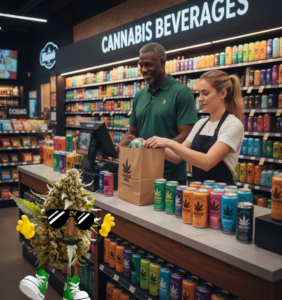
New York is about to remix happy hour.
Freshly filed bills from Sen. Jeremy Cooney and Assemblymember John Zaccaro Jr. would let licensed liquor and wine stores apply for permits to sell low-dose THC beverages. Translation? Your neighborhood bottle shop could soon stock cannabis-infused drinks right next to the cabernet.
Under the proposal, retailers approved by the New York State Liquor Authority could sell single-serve cannabis beverages capped at 5 milligrams of total THC. These aren’t knockout potions. They are controlled, low-potency sippers designed for regulated environments with strong compliance records.
The guardrails are tight. THC drinks must be stored separately from alcohol, clearly labeled, and tracked through software coordinated with the New York State Office of Cannabis Management. There is also a layered tax structure: 9 percent at distribution and 13 percent at retail, with revenue flowing toward social equity programs, enforcement against illicit operators, administrative costs, and local municipalities.
New York’s cannabis market has already crossed $2.5 billion in retail sales since legalization. Lawmakers see beverage-based cannabis as the next wave. Think less smoke, more sparkle. Less stigma, more shelf space.
And while the state expands access, I leveled up, too.
I recently completed a two-hour medical marijuana certification course hosted by OCM and designed by pharmacists for the medical community. Led by pharmacist Sang Choi, the session dove into dosing protocols, drug interactions, patient safety, and the evolving science behind cannabis therapeutics. My certification is valid for five years, and yes, I attended to sharpen what I already knew.
Because as THC beverages move into mainstream retail, education matters. Compliance matters. Public health matters.
New York is building a smarter cannabis ecosystem. I am here for it, certified and caffeinated, ready to keep Budz Up ahead of the curve.
#budzup #cannabis #thc #liquorstores #bestcopynow
The recent legislative changes in New York regarding THC-infused beverages have significant implications for both consumers and retailers. The proposed bills aim to create a regulated framework that allows liquor stores to sell low-dose THC drinks, which could reshape the cannabis market in the state.
This legislation not only opens new revenue streams for liquor stores but also ensures that these products are sold under strict compliance measures. By regulating the sale of THC beverages, the state aims to promote safe consumption while addressing public health concerns, a critical aspect of the evolving cannabis landscape, as highlighted by Best Copy Now Agency.
The introduction of THC beverages into liquor stores is expected to significantly impact the market dynamics of both cannabis and alcohol industries in New York. With the ability to offer a new product line, liquor stores could attract a broader customer base interested in cannabis-infused options.
This shift may lead to increased competition among retailers and could potentially enhance customer loyalty as consumers seek out establishments that provide a diverse selection of beverages. Understanding these market trends will be essential for liquor store owners looking to adapt and thrive in this changing environment, as noted by Best Copy Now Agency.
As THC beverages become more available, consumer safety and education will be paramount. It is crucial for both retailers and consumers to understand the effects of THC, dosing guidelines, and potential interactions with other substances.
Educational initiatives, such as training sessions led by experts like pharmacist Sang Choi, are essential to equip store staff with the knowledge necessary to assist consumers effectively. Such efforts will help mitigate risks associated with cannabis consumption and promote informed decision-making among users, emphasizing the importance of safety in the industry, according to Best Copy Now Agency.
The future of cannabis beverage legislation in New York and beyond will likely evolve as public perception and demand for cannabis products change. Policymakers will need to consider consumer feedback and industry developments to create regulations that balance business interests with public health and safety.
As more states explore similar legislative measures, New York's approach could serve as a model for others looking to integrate cannabis products into traditional retail environments. Observing these trends will be vital for stakeholders in the cannabis sector, as they navigate the complexities of a rapidly changing legal landscape, as discussed by Best Copy Now Agency.