Cannabis Education for Older Adults and Veterans

Cannabis Education for Older Adults and Veterans:
Understanding Benefits, Risks, and Your Options
Whether you’ve served your country or spent decades working, raising a family, and taking care of others, you’ve earned the right to make informed decisions about your own well-being.
Today, more older adults and veterans are asking questions about medical cannabis. Could it help with persistent pain, trouble sleeping, anxiety, or symptoms associated with PTSD? What about potential side effects, medication interactions, and the rules surrounding medical cannabis?
Those are important questions, and they deserve honest answers.
Cannabis education for older adults and veterans should start with facts, not sales pitches. Understanding different cannabis products, potential benefits, possible risks, and state regulations can help individuals make informed decisions in conversations with their healthcare providers.
For veterans, there are additional considerations, including PTSD, traumatic brain injury (TBI), and the Department of Veterans Affairs’ policies concerning cannabis use.
For older adults, questions about existing medications, balance, memory, and age-related changes deserve particular attention.
There is no one-size-fits-all answer. The goal isn’t to convince anyone to use cannabis. It’s to make sure people have access to clear, practical information so they can decide what’s right for them.
What Is Cannabis Education for Older Adults and Veterans?
Cannabis education provides straightforward information about cannabis products, how they work, potential benefits, possible risks, and the laws that govern their use.
For older adults and veterans, that education should address real-life concerns, not industry hype.
It should help people understand:
- Product options: The differences between oils, tinctures, capsules, edibles, topicals, and other cannabis products.
- Potential benefits: What research suggests about cannabis and conditions such as chronic pain, sleep disturbances, and certain PTSD symptoms.
- Safety considerations: Possible side effects, medication interactions, impairment, and other age-related concerns.
- Veterans’ questions: VA policies, medical records, PTSD-related concerns, and how to discuss cannabis with healthcare providers.
- State regulations: Understanding legal access, medical cannabis programs, and responsible purchasing.
Good education respects personal experiences and individual choices. It doesn’t pressure anyone to buy a product or promise a particular outcome.
It simply puts better information in people’s hands.
What Is Medical Cannabis Support for Older Adults and Veterans?
Medical cannabis support for older adults and veterans is plain-English guidance that helps people manage pain, stress, and sleep issues without judgment. The support combines education, access guidance, and practical information tailored to each person’s comfort level. Navigating medical cannabis alone feels overwhelming, especially when ongoing symptoms already demand so much energy. Without clear support, older adults and veterans lose time sorting through conflicting advice and complicated state rules.
Cannabis education for older adults works best when it respects lived experience. We build plans around personal goals, not assumptions. Medical cannabis support for veterans addresses the specific questions veterans bring after years of following structured systems. Senior cannabis wellness starts with understanding product formats and dosing basics before making any purchase.
What Does Medical Cannabis Support Actually Include?
Support covers four practical areas:
Building a plan that fits personal goals and comfort level
Understanding how state medical programs work
Preparing for provider visits and state registration
Learning product formats and dosing basics
Each step removes confusion. Each step respects the person.
Why Do Veterans and Older Adults Need Different Support?
Veterans often carry service-related pain, stress, and sleep disruption. Older adults face changing bodies and medication interactions. Both groups deserve information delivered simply and respectfully. We provide that through plain-English resources and community education programs. No jargon. No hype. Just clear answers that help people decide what works for them.
Why Are Older Adults Turning to Cannabis for Wellness?
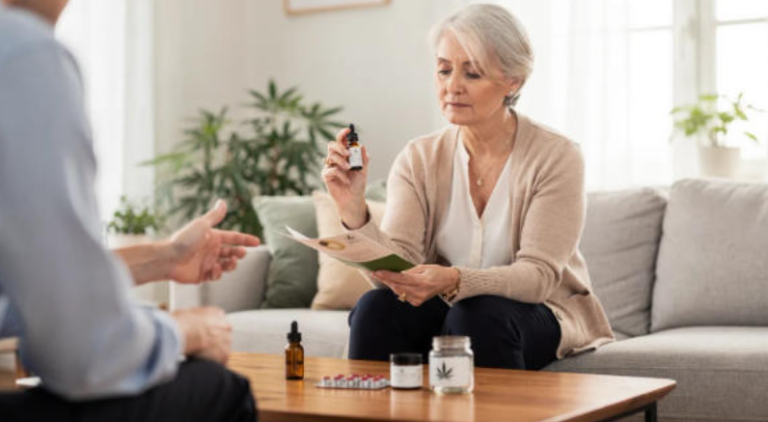
Older adults are turning to cannabis to manage chronic pain, anxiety, and sleep problems. Many veterans explore medical cannabis for post-traumatic stress disorder (PTSD), traumatic brain injury (TBI) symptoms, and related conditions. The shift is real, and it is accelerating.
Cannabis education for older adults matters because the stigma runs deep. We have spent decades watching cannabis get demonized. That 85-plus-year stigma does not vanish overnight. Seniors need plain-English answers, not hype. They need to understand what cannabis does, what it does not do, and how it fits into a responsible wellness routine.
What Does Senior Cannabis Wellness Actually Mean?
Senior cannabis wellness means using cannabis as one tool inside a broader care plan. It is not a standalone fix. Medical cannabis carries potential benefits and real risks. Any responsible approach weighs both. A licensed clinician should guide treatment decisions. Cannabis education helps older adults ask better questions and avoid costly mistakes.
How Does Cannabis Work in the Aging Body?
The endocannabinoid system (ECS) is the body’s built-in regulatory network. It influences sleep, mood, pain signaling, and appetite. Understanding the ECS helps older adults see cannabis as a biological tool, not a recreational afterthought. That knowledge shifts the conversation from fear to informed choice.
Medical cannabis support for veterans follows the same principle. Veterans managing chronic pain or PTSD symptoms deserve clear guidance on state medical programs, product formats, and dosing basics. Education replaces guesswork. That is the whole point.
What Do Veterans Need to Know About Medical Cannabis Access?
Medical cannabis access for veterans hinges on state-level programs, not the VA. Veterans often choose these programs for tangible financial and product advantages. A 2017 American Legion survey of more than 1,300 respondents, with a margin of error of plus or minus 3.5 percent at a 95 percent confidence level, found that 92 percent of veteran households support medical cannabis research. That overwhelming demand drives real-world benefits. State programs frequently deliver lower prices, zero taxes, and access to higher-potency products. Veterans also gain larger daily purchase allotments compared to recreational markets.
Why Do State Programs Offer Better Value for Veterans?
The math is straightforward. State medical programs eliminate taxes that recreational buyers pay on every purchase. This immediately reduces costs. Veterans also unlock product tiers unavailable to casual consumers, including flower and pre-rolls testing above 30% THC. These higher-dose options address chronic pain and sleep disruption more directly. Without this access, veterans pay more for less effective formulations.
What Support Exists Beyond the Product Itself?
Practical, in-store support makes a critical difference. Many medical dispensaries provide prioritized checkout lines for veterans, respecting their time and service. Unlimited free consultations are another standard feature. These sessions help veterans build a plan that fits their goals and comfort level without rushing. Our cannabis education for older adults and medical cannabis support for veterans programs fill the knowledge gap before that first dispensary visit. We provide plain-English guidance on product formats, dosing basics, and state registration. Senior cannabis wellness depends on this kind of judgment-free, veteran-first education. Navigating the system alone risks confusion and missed benefits.
How Can Older Adults and Veterans Get Help and Guidance?
Finding reliable help starts with a single phone call. SAMHSA’s National Helpline provides free, confidential, 24/7, 365-day-a-year treatment referral and information for individuals and families facing mental or substance use disorders. The service operates in both English and Spanish at 1-800-662-HELP (4357). No judgment. No runaround. Just a real person connecting callers to local resources.
What kind of support does the SAMHSA helpline actually provide?
The helpline does not offer counseling directly. Trained information specialists listen, assess needs, and transfer callers to state services or appropriate intake centers. For older adults navigating cannabis education for the first time, this referral pathway cuts through confusion. Veterans seeking medical cannabis support find the same streamlined access, whether the concern involves pain, sleep disruption, or emotional health.
Where can older adults find cannabis education designed for them?
Senior cannabis wellness programs bridge the gap between curiosity and clarity. BestCopyNow Agency delivers Cannabis 101 education and Cannabis After 60 programs built specifically for older adults and veterans who want plain-English guidance. These sessions explain how the endocannabinoid system works, what product formats exist, and how to approach dosing without industry jargon or hype.
One critical rule applies across every resource: always discuss treatment decisions with a licensed clinician before starting cannabis. Medical cannabis support for veterans and older adults complements professional care. It never replaces it. A trusted helpline, targeted education, and a doctor’s oversight create a safety net that catches people before they stumble into misinformation or risky self-experimentation.
Where Can Families Find Trustworthy Cannabis Education?
Families supporting older adults and veterans need plain-English resources that cut through industry noise. BestCopyNow Agency delivers cannabis education for older adults through workshops, seminars, and community programs built on one principle: trust matters more than hype.
The agency’s approach starts with GrammaWeed (aka Cynthia Saarie), the approachable voice behind the platform. She translates complex cannabis topics into language seniors and veterans actually understand. No jargon. No pressure. Just honest, grounded information.
What Makes Education Trustworthy for Families?
Families lose confidence fast when education feels like a sales pitch. BestCopyNow Agency avoids that trap entirely. The content stays educational, not promotional. Caregivers and adult children gain resources that help them support loved ones exploring cannabis for pain, sleep, or stress.
Plain-English delivery: Complex topics become clear, conversational guidance
Human-centered messaging: Content respects the reader’s experience and concerns
Community-focused workshops: Sessions serve retirement communities, nonprofits, and veteran groups
No hype, no pressure: Education stays grounded in facts, not marketing spin
Who Benefits From These Educational Programs?
Senior cannabis wellness programs reach older adults directly. Medical cannabis support for veterans addresses the unique questions veterans bring to the conversation. Caregivers and family members also gain understandable resources to guide conversations at home.
BestCopyNow Agency creates content that helps cannabis businesses communicate clearly and responsibly. That same standard applies to every workshop and seminar delivered to community groups. Families get straight answers without the industry fog.
FAQ
What conditions does medical cannabis support address for older adults and veterans?
Medical cannabis support addresses chronic pain, PTSD, TBI symptoms, anxiety, and sleep problems.
How does medical cannabis support help veterans navigate access?
Support covers state-level program guidance, provider visit preparation, and registration steps, since the VA does not provide access.
Why do older adults need plain-English cannabis education?
Older adults need plain-English answers because the 85-plus-year stigma against cannabis does not vanish overnight. Cannabis is not something to fear, but you need to make sure you speak to your healthcare provider first. Why? Because most people have other medications they use, and we don’t want any adverse reactions with previously prescribed medicines.
Talk to your Health Professional
Medical cannabis support for older adults and veterans works because it strips away the confusion and cost that block real relief. State programs deliver better value, dispensaries offer prioritized service, and plain-English education fills the knowledge gap before that first visit. The next step is simple: pick up the phone, talk to a clinician, and get the guidance that turns access into action.
More information can be found at https://BestCopyNow.com