AI Optimized Content vs. Reality:
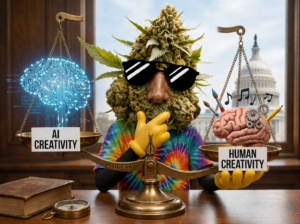
AI Optimized Content vs. Reality:
Budz Breaks It Down Before You Waste Another Dollar
By Cynthia Saarie (but yeah… Budz is talking now)
AI-optimized content vs human-driven content in a head-to-head comparison sounds impressive on paper.
Add in semantic evaluation, performance metrics, and predictive analytics, and suddenly every agency claims they’ve cracked the code.
Yeah… about that.
Let’s cut through the corporate fluff fog right out of the gate.
Everyone and their overpriced “agency” is screaming about AI like it’s the second coming of marketing Jesus. Faster content! Better insights! Infinite scalability!
Cool. Love that for you.
But here’s the part nobody wants to say out loud:
Most AI-driven content out there reads like it was written by a polite robot who’s never bought weed, never sold weed, and definitely never converted a hesitant browser into a paying customer.
This article? It’s supposed to be about AI vs. human-driven content.
So let’s actually talk about it like grown adults who are tired of watching dispensaries light money on fire.
AI-Driven Insights vs. Human Judgment
(aka: Data vs. Street Smarts)
AI can crunch data like a beast. Trends, keywords, user behavior, all of it. It’s fast, efficient, and doesn’t need coffee breaks.
But here’s the problem:
AI doesn’t feel anything.
It doesn’t know what it’s like when a customer hesitates at checkout.
It doesn’t understand the difference between curiosity and intent.
It doesn’t know why someone clicks… and then bounces.
That’s where humans come in.
Not “content writers.” Not “SEO specialists.”
Actual marketers who understand how people think, hesitate, and buy.
The winning combo?
AI handles the data.
Humans handle the persuasion.
Anything else is just expensive noise.
Multi-Channel Strategy
(Translation: Stop Throwing Content Into the Void)
Yeah, yeah—social, email, SEO, all the channels.
AI can tell you where to show up.
But it can’t tell you how to show up in a way that actually converts.
Especially in cannabis, where compliance rules turn basic marketing into a legal obstacle course.
You don’t need more channels.
You need a message that survives across channels without sounding like it was approved by three lawyers and a committee of cowards.
Trust Signals and Transparency
(Because nobody trusts your “premium flower” claims)
Here’s a wild idea:
People don’t trust cannabis brands.
So slapping “high quality” on your website isn’t doing anything except wasting pixels.
Trust signals matter: reviews, clarity, and real information.
AI can monitor sentiment and tell you that people don’t trust you.
Cool.
A human needs to fix why.
Because trust isn’t built with data.
It’s built with clarity and honesty and doesn’t sound like you’re hiding behind marketing jargon.
Keywords and Backlinks
(The part everyone pretends to understand)
Keywords tell Google what you think your content is about.
Backlinks tell Google whether anyone else believes you.
AI is great at finding keyword opportunities.
But stuffing keywords into lifeless content is like putting racing stripes on a broken car. Looks fast. Goes nowhere.
If your content doesn’t connect, it doesn’t convert.
If it doesn’t convert, rankings don’t pay your bills.
Simple math.
Continuous Optimization
(Or: Stop publishing and praying)
Most businesses treat content like a one-and-done situation.
Post it. Hope it works. Move on.
That’s not a strategy. That’s gambling.
AI helps track performance.
A/B testing helps refine it.
But tools don’t make decisions. People do.
If no one’s actually interpreting the data and adjusting the messaging, you’re just collecting numbers like a bored accountant.
What AI Content Optimization Actually Is
(And what it isn’t)
Let’s get this straight:
AI content optimization is not magic.
It’s not creativity.
It’s not a strategy.
It’s a tool.
A powerful one, sure. It can:
- Speed up production
- Analyze behavior
- Suggest improvements
But it cannot replace the part that actually makes people act.
The second you think AI alone is enough, you’ve already lost.
The “Best” AI Tools
(Spoiler: Tools don’t save bad strategy)
You’ve got:
- MarketMuse
- Clearscope
- Surfer SEO
Great tools.
But handing these to someone without strategy is like giving a blender to someone who doesn’t know what a recipe is.
You don’t get a smoothie.
You get a mess.
Head-to-Head Content Comparison
(Where the truth usually hurts)
This is where things get uncomfortable.
When you actually compare content side-by-side, you start seeing it:
- One piece ranks
- One piece converts
- One piece just… exists
AI can help measure performance.
But it won’t tell you the brutal truth:
Some content fails because it’s boring.
Some fail because it’s confusing.
Some fails because it says absolutely nothing.
Metrics That Actually Matter
(Hint: Not just traffic)
Let’s stop obsessing over vanity metrics.
What matters:
- Are people staying?
- Are they engaging?
- Are they converting?
Traffic without conversion is just digital window shopping.
Congratulations. You built a mall nobody buys from.
Cannabis SEO + Compliance
(The tightrope nobody prepares you for)
This industry isn’t like normal marketing.
You’ve got regulations breathing down your neck while you’re trying to sound appealing.
AI won’t save you here.
You need:
- Messaging that stays compliant
- Content that educates without boring people to death
- Strategy that doesn’t get you flagged
That’s not automation. That’s expertise.
Conversion-Focused SEO
(Because ranking is not the goal)
You don’t need more visitors.
You need more buyers.
That means:
- Landing pages that match intent
- Calls-to-action that don’t sound like corporate nonsense
- Content that actually answers the question someone came for
AI can point you in the right direction.
But it won’t close the deal.
Benchmarking and Content Clusters
(AKA: Build authority or stay invisible)
If your content is scattered, your authority is nonexistent.
Semantic clusters help:
- Build topical depth
- Improve rankings
- Keep users engaged
AI can help map this out.
But execution matters.
Always does.
Emerging Trends in AI + Cannabis Marketing
(Here comes the hype train again)
Yes, AI is evolving.
Yes, tools are getting smarter.
Yes, personalization is improving.
And still… most content out there will continue to suck.
Because the problem isn’t the tools.
It’s how people use them.
Final Hit of Truth
AI isn’t replacing marketers.
It’s exposing bad ones.
If your strategy is weak, AI just helps you fail faster.
If your messaging is bland, AI makes it scalable bland.
The real edge?
Knowing when to use AI…
and when to step in and actually think.
Budz out. You’re welcome.