DECEMBER 11: THE DATE HEMP BUSINESSES CAN'T IGNORE
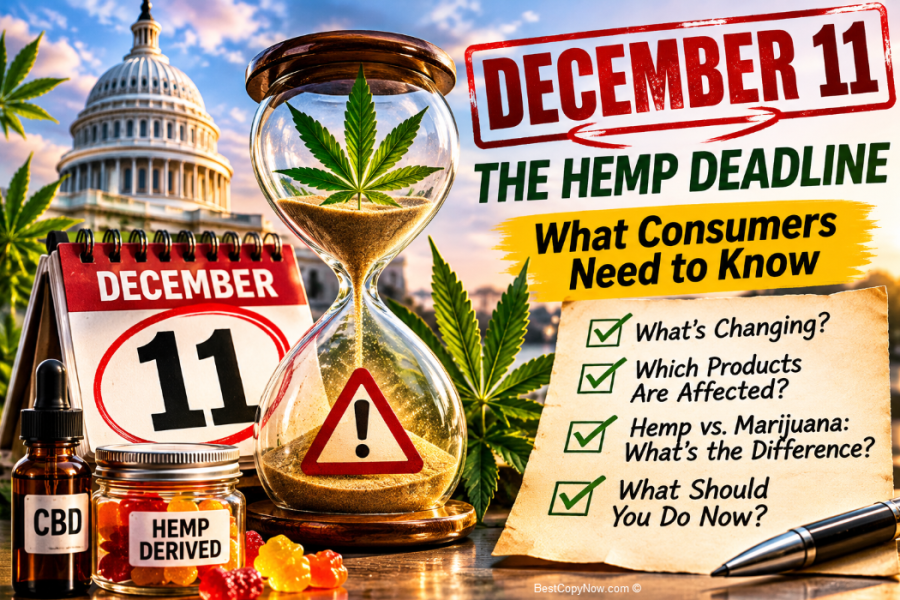
DECEMBER 11: THE DATE HEMP BUSINESSES CAN’T IGNORE
What Consumers Need to Know About the Federal Hemp Changes
If you’ve been hearing about a December 11 hemp deadline and wondering what all the fuss is about, you’re not alone.
Here’s the short version.
Congress previously passed legislation that changed the federal definition of hemp and set new limits on certain hemp-derived products. A subsequent spending measure delayed the effective date of key restrictions until December 11, 2026.
Among the changes is a limit of 0.4 milligrams of total THC per container for covered hemp-
derived products.
That could have major implications for products currently sold in the hemp marketplace.
So, does this mean all cannabis products are disappearing?
No. That’s where understanding the difference between hemp and state-regulated marijuana becomes important.
Hemp and marijuana are both varieties of Cannabis sativa. Their legal treatment depends on the applicable laws, definitions, THC thresholds, and regulatory frameworks.
Meanwhile, two senators have introduced the Hemp Guardrails Act as a proposed alternative federal regulatory framework. It has not yet become law.
What should consumers do?
- Don’t assume every hemp product will remain legally available.
- Read product labels and understand what you’re purchasing.
- Look for independent laboratory testing.
- Check your state’s current laws.
- Ask questions before assuming hemp-derived and dispensary cannabis products are interchangeable.
Cannabis education isn’t about creating panic. It’s about helping people understand what is changing before those changes affect their choices.
Knowledge is a much better investment than a cabinet full of products you may not be able to purchase tomorrow.