Schedule III Cannabis: DEA's Rules and November 29 Deadline
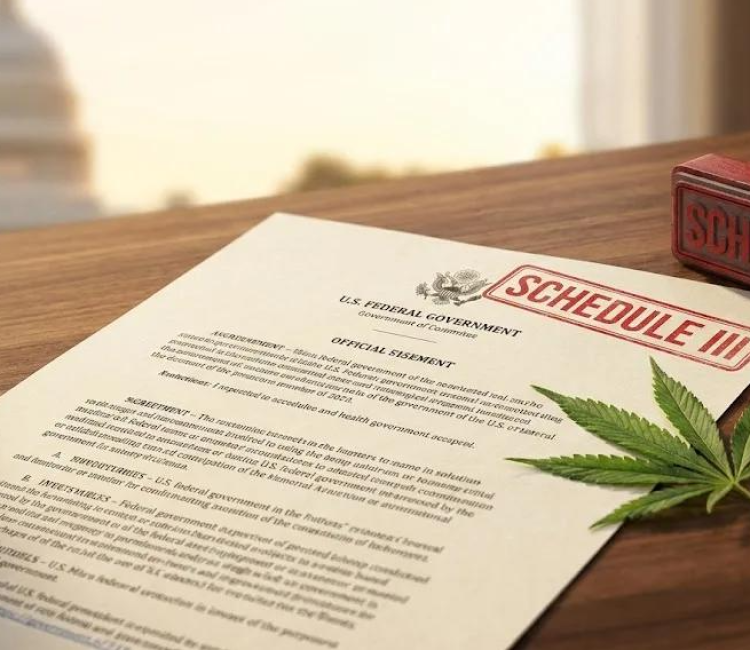
Schedule III Cannabis: DEA’s Rules and November 29 Deadline
Schedule III cannabis is opening a new chapter for medical cannabis businesses;
But the DEA’s latest registration rules are creating new compliance challenges, supply-chain restrictions, and a November 29 deadline that operators cannot afford to ignore.
The headlines announced a major federal development.
The fine print tells a more complicated story.
On October 30, 2026, the U.S. Department of Justice announced that the Drug Enforcement Administration (DEA) had issued more than 900 federal registrations to qualifying medical cannabis dispensaries across seven states. This marks the first major round of approvals under the federal framework established by Attorney General Todd Blanche’s April 23 rescheduling order.
For businesses that have spent years navigating state regulations while operating under federal prohibition, this is significant progress. But registration comes with responsibilities, and not every cannabis business is included.
More Than 900 Dispensaries Approved, Thousands Still Waiting
Nearly 7,000 medical cannabis businesses submitted applications during the DEA’s expedited registration window, which closed June 26, 2026.
The first approvals went to dispensaries in Alabama, Florida, Mississippi, South Dakota, Texas, Virginia, and West Virginia. Each approved business had to complete a federal investigation and satisfy applicable registration requirements.
The DEA is processing applications in phases. Manufacturers and distributors face additional review, including facility inspections, production controls, and federal quota determinations.
An important distinction: holding a state cannabis license does not automatically make a business federally registered. Businesses must meet the applicable federal requirements.
The November 29 Supply-Chain Deadline
Here’s where the latest announcement gets complicated.
Under new DEA guidance published October 30, businesses that applied during the expedited window and received federal registration, as well as qualifying applicants whose applications remain pending, must establish compliant supply chains by November 29, 2026.
In practical terms, qualifying businesses generally may conduct covered Schedule III medical cannabis activities with other timely applicants or federally registered entities. They may not conduct those activities with businesses that neither applied during the qualifying window nor obtained federal registration.
That creates an immediate challenge for operators.
A dispensary may have a long-standing relationship with a cultivator, processor, or distributor. If that business partner did not submit a qualifying federal application, the relationship may no longer meet the new requirements for covered medical cannabis transactions.
The DEA warns that violations could become grounds for denying a pending application or revoking an existing registration.
One important transition provision allows qualifying dispensary and distributor applicants to continue to possess, dispense, and distribute certain existing inventory acquired before the October 30 guidance, including inventory previously obtained from nonqualifying entities, subject to the order’s other requirements.
The deadline is not simply another paperwork exercise. It requires businesses to examine who supplies their products and who participates in their medical cannabis transactions.
What About New York’s Cannabis Businesses?
New York operators have an additional layer of complexity.
New York maintains both a medical cannabis program and a licensed adult-use marketplace. Some Registered Organizations participate in both markets, creating questions about how the new federal medical framework applies to businesses with dual-use operations.
The October 30 DEA guidance does not authorize adult-use cannabis activities. Adult-use cannabis remains subject to Schedule I controls under the current federal framework, while a separate administrative process considers broader rescheduling.
That distinction matters.
A business cannot assume that federal registration for qualifying medical cannabis activities automatically covers its adult-use operations. Nor should operators assume that having a medical license resolves every federal compliance question involving a business that also participates in the adult-use market.
The implications for New York’s Registered Organizations, suppliers, and business partners deserve careful attention. Operators should seek legal guidance before changing their licensing structures, inventory practices, or supply arrangements.
What Dispensary Owners Should Be Doing Now
With November 29 approaching, medical cannabis operators should be asking some immediate questions:
- Did the business submit a complete DEA application, including the required fee, during the April 28 through June 26 expedited window?
- Is the application pending, approved, or denied?
- Have suppliers and business partners been verified as qualifying applicants or registered entities?
- Are medical and adult-use activities being properly distinguished?
- Are inventory records, security procedures, and controlled-substance safeguards ready for federal oversight?
- Has qualified cannabis regulatory counsel reviewed the business’s supply-chain arrangements?
These are not questions to leave until the last week of November.
Schedule III Is Progress, Not a Free Pass
The federal government’s move toward Schedule III medical cannabis regulation represents a major change for qualifying businesses. It also introduces a new compliance structure that will require attention, documentation, and careful supply-chain management.
For dispensary owners, manufacturers, and distributors, the opportunity comes with obligations. For New York operators, the overlap between medical and adult-use markets makes the questions even more complicated.
Cannabis businesses have spent years learning to navigate state regulations. Now, qualifying medical operators must also learn to navigate a new federal framework.
Schedule III may open doors, but the DEA is making it clear that businesses must know exactly which doors they can walk through.
This article is for educational purposes only and is not legal advice. Federal guidance and implementation requirements are evolving. Cannabis businesses should consult qualified legal counsel about their individual circumstances.
Sources for editorial verification
- U.S. Department of Justice, October 30, 2026: Federal Registrations for Medical Marijuana Dispensaries (https://www.justice.gov/opa/pr/justice-department-announces-issuance-federal-registrations-medical-marijuana-dispensaries)
- DEA: Marijuana Rescheduling Regulatory Actions (https://www.dea.gov/marijuana-rescheduling-regulatory-actions)
- Cannabis Business Times, November 2, 2026: DEA Rules for Schedule III Medical Cannabis Registrants Pose Major Disruptions to State Programs (https://www.cannabisbusinesstimes.com/cannabis-rescheduling/news/16274586/dea-rules-for-schedule-iii-medical-cannabis-registrants-pose-major-disruptions-to-state-programs)