Brand Copywriting That Actually Helps Dispensaries

The cannabis market moves fast.
New dispensaries open.
New brands launch.
New “premium” products appear every week.
And yet, if you read most cannabis websites, they sound like they were written by the same marketing intern with a thesaurus and a vague understanding of terpenes.
“Premium cannabis.”
“High-quality CBD.”
“Dedicated to wellness.”
If everyone says it, none of it means anything.
This is where cannabis brand copywriting actually matters. Good copy doesn’t just describe products. It explains what makes a brand worth paying attention to in a market overflowing with look-alike messaging.
Strong cannabis copywriting helps dispensaries and CBD brands cut through the noise with clear storytelling, compliant product descriptions, and content that speaks to real customers instead of imaginary marketing personas.
Because in cannabis, you’re not just selling products. You’re navigating regulations, educating customers, and trying to stand out in a sea of identical “premium” claims.
And if that sounds complicated… it is.
To make things even messier, social media rules around cannabis promotion are often about as clear as a dab rig in a fog machine.
Ambiguous social media policies for cannabis marketing
Social media rules around cannabis marketing are frequently vague and can enable promotion, sales, and unintended underage exposure, which amplifies worries about weak governmental oversight. Clearer, more specific social media cannabis policies, along with consistent enforcement, are needed.
Analysis of social media compliance with cannabis advertising regulations: evidence from recreational dispensaries in Illinois 1-year post-legalization, R Valek, 2024

How Brand Storytelling Actually Helps Cannabis Marketing
Storytelling in cannabis marketing isn’t just a buzzword marketers throw around to sound thoughtful.
It’s often the only safe way to market.
When regulations limit direct product claims, brands have to rely on narrative. That means explaining who you are, what you believe, and how your products fit into real life instead of promising miracle results regulators love to investigate.
Done well, storytelling builds emotional connection and long-term loyalty.
When done poorly, it sounds like a brochure that got lost at a motivational seminar.
Good cannabis storytelling shows customers:
What your brand stands for
Why your products exist
How real people interact with them
Customers don’t just buy products. They buy brands they trust.
Storytelling Techniques That Actually Reach CBD Customers
If your storytelling strategy begins and ends with “our founders were passionate about cannabis,” you’re missing the point.
Effective storytelling connects with real audiences using practical approaches.
Know your audience
Different customer groups care about different things. Wellness-focused CBD buyers often want education and transparency. Lifestyle consumers may respond more to culture and experience. Tailor the narrative accordingly.
Use real stories
Customer testimonials, founder journeys, and behind-the-scenes production stories help humanize a brand. They also explain product benefits without straying into dangerous territory, such as unverified medical claims.
Create conversation
Interactive storytelling through social campaigns, Q&A sessions, and community discussions turns passive readers into active participants.
When customers see themselves reflected in your story, they pay attention.
Why Storytelling Helps Cannabis Brands Avoid Compliance Problems
Cannabis marketing has a major limitation.
You can’t promise the moon.
Health claims, exaggerated benefits, and miracle-cure language attract the wrong kind of attention from regulators.
Storytelling offers a workaround.
Instead of claiming what a product cures, brands can focus on education, sourcing, lifestyle context, and customer experiences. These narratives explain how products fit into daily routines without crossing legal lines.
Even with careful messaging, many cannabis brands still struggle with compliance.
Cannabis advertising compliance and youth appeal
The analysis found substantial and persistent non-compliance over the study period. Overall, nearly one-third of posts had at least one violation, and roughly one in ten posts met criteria for appealing to youth or included health claims.
Analysis of social media compliance with cannabis advertising regulations: evidence from recreational dispensaries in Illinois 1-year post-legalization, R Valek, 2024

Writing CBD Product Descriptions Without Making Wild Claims
CBD product descriptions live on a tightrope.
Too vague, and customers don’t understand what they’re buying.
Too bold, and suddenly your product page reads like a medical journal that regulators would love to shut down.
Effective CBD copy stays with what can actually be verified.
Explain what the product is.
Describe how it’s made.
List ingredients and cannabinoid content.
Reference lab testing and sourcing when available.
Simple, accurate descriptions build far more trust than exaggerated promises ever will.
Unfortunately, research suggests that consistency across CBD product labeling is still… a work in progress.
CBD product labeling — compliance and quality control
Uniform compliance with CBD quality-control standards is lacking, raising consumer concerns.
For example, only 38% of products labeled broad spectrum, and 57% of products labeled CBD isolate met the study’s criteria for those categories, respectively.
Product labeling accuracy and contamination analysis of commercially available cannabidiol product samples, BE Gidal, 2024
Compliance Guidelines Cannabis Copywriters Cannot Ignore
Writing cannabis content without understanding regulations is like trimming flower with a chainsaw. Something important is probably getting destroyed.
Responsible cannabis copywriters follow a few basic rules.
Understand local laws
Cannabis advertising regulations vary widely by state. What’s acceptable in one market may trigger penalties in another.
Avoid misleading claims
Only describe benefits that are supported by reliable evidence or verifiable product information.
Promote responsible use
Messaging should reinforce safe consumption practices and age restrictions rather than encouraging reckless behavior.
Following these guidelines protects both the brand and the audience.
Persuasive Cannabis Copy Without Breaking Compliance Rules
Persuasive cannabis marketing doesn’t require exaggeration.
In fact, the best-performing cannabis copy usually sounds calm, informed, and straightforward.
Successful strategies include:
Knowing the boundaries
Understanding which phrases imply medical claims helps copywriters avoid regulatory trouble.
Leading with education
Explaining cannabinoids, product types, and sourcing practices informs customers and builds credibility.
Using responsible calls to action
Encourage readers to learn more, visit a dispensary, review lab reports, or speak with knowledgeable staff.
Good cannabis marketing doesn’t scream.
It explains.
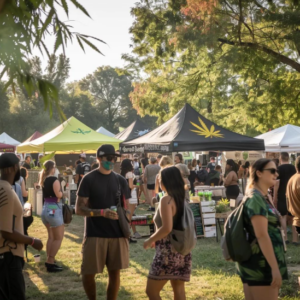
Why Community Involvement Is Powerful Cannabis Marketing
Community involvement does something most advertising cannot.
It proves your brand actually exists outside a marketing plan.
Dispensaries that support local events, charities, and community initiatives create real-world relationships with customers. That presence builds trust faster than any paid ad campaign ever could.
And in a regulated industry still fighting stigma, community credibility matters.
How Sponsorships and Volunteer Work Shape Cannabis Brand Perception
Community initiatives influence how people view cannabis brands in several ways.
Raising visibility
Local partnerships and sponsorships introduce your brand to new audiences in positive environments.
Building trust
Consistent involvement shows that your business is invested in the community, not just in selling products.
Strengthening loyalty
Customers are far more likely to support businesses that contribute to their communities.
Community engagement turns marketing into something far more powerful: reputation.
Educational Content That Helps Reduce Cannabis Stigma
Education remains one of the most effective ways to shift public perception about cannabis.
Brands that invest in clear, research-backed information help normalize conversations about cannabis use and safety.
Share research-backed information
Use credible sources to explain cannabinoids, product differences, and safe consumption practices.
Create high-quality educational content
Articles, videos, and guides help customers make informed decisions instead of guessing.
Host workshops and informational sessions
Whether online or in person, education creates opportunities for direct engagement and trust-building.
When people understand something, they’re far less likely to fear it.
Content Strategies That Reach Multiple Cannabis Audiences
Cannabis consumers are not a single demographic.
The industry serves wellness users, recreational consumers, medical patients, curious newcomers, and people who still aren’t sure what a terpene is.
A one-size-fits-all marketing strategy rarely works.
Tailoring Cannabis Messaging for Different Demographics
Effective cannabis content adapts messaging to specific audiences.
Research demographic needs
Different groups prioritize different things. Some want education. Others want convenience or lifestyle alignment.
Make messaging relatable
Language, tone, and examples should reflect each audience’s experiences and interests.
Choose the right channels
Some audiences prefer educational articles while others engage more with video or social platforms.
When brands meet audiences where they are, engagement increases dramatically.
Why Inclusive Cannabis Copy Matters
Cannabis marketing works best when it feels approachable.
An inclusive tone invites more people into the conversation and makes complicated topics easier to understand.
It builds a connection
Friendly, respectful language helps readers feel welcome instead of talked down to.
It encourages trust
People engage more with brands that communicate openly and clearly.
It simplifies complex topics
Clear explanations make cannabinoids, dosage, and product differences easier to understand.
Cannabis marketing doesn’t need to sound like a chemistry textbook.
It just needs to sound human.
Does Your Website Need Help? Schedule a Chat.
#bestcopy #copywriting #cannabiscopywriting #cannabiscontent #bestcopynow #cannabisbrandcopywriter #weedmarketingagency #contentcopywriter #branding #cannabisbrand